Local Low Estrone, Hypotrichia, and That “See‑Through” Look: A Simple Guide
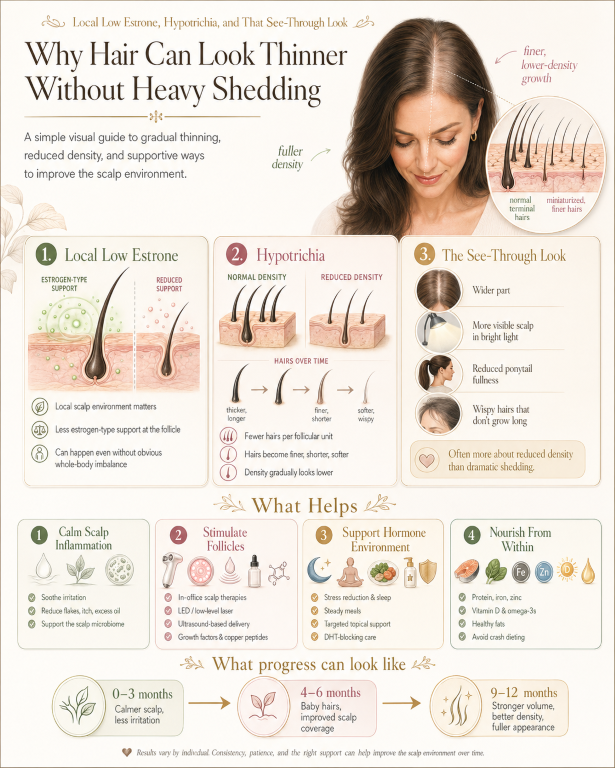
If your hair looks thinner even though you’re not shedding fistfuls, you’re not alone. In trichology we call this pattern hypotrichia—fewer, finer hairs growing from each follicular unit, so overall density drops and the part looks wider. One common driver, especially in women, is what many European practitioners call local low estrone. Which means your scalp’s follicles aren’t getting enough of the estrogen‑type support they like, even if your blood tests look “normal.”
Estrone acts through estrogen receptors to influence reproductive tissues, bone, skin, and hair follicles, and becomes the predominant circulating estrogen after menopause.
What “local low estrone” really means
Think of each hair follicle as its own tiny ecosystem. It can make, convert, and use hormones a little differently than the rest of your body. So labs may say your hormones are fine, but inside the follicle the balance can still skew low on estrone support. When that happens, hairs spend less time in the active growth phase, strands grow in shorter and finer, and over time the ponytail feels or individual hairs appear "skinnier". This is the “see‑through” look many clients describe.
How this pattern shows up
It tends to be gradual. You notice more scalp shining through in bright light or in photos with flash, a part line that looks wider, and the crown looking thinner under overhead lighting. There are more of those short, wispy hairs that never seem to get past a certain length, and the texture shifts toward softer strands that won’t hold a curl or volume, so styles collapse by midday no matter how much product you use. The ponytail feels smaller, the hair tie wraps an extra time, and yet the shower drain looks normal—daily shed counts aren’t dramatically different, but the overall fullness is. It’s not breakage—the ends look intact rather than frayed, and you’ll see fewer snapped mid-shaft pieces, because the follicle is simply making smaller, finer hairs with each cycle.
Why it happens
Life stages and stress are big players. Hormonal shifts during different periods in life can change how follicles cycle. For women, perimenopause and postpartum shifts alter estrogen and progesterone, pushing more hairs into resting, so regrowth may emerge finer. Chronic stress elevates cortisol and inflammation, shortening the growth phase. Rapid weight loss and very low body fat reduce energy and sex hormones, while nutrient gaps—iron, vitamin D, zinc, essential fatty acids—deprive follicles of building blocks. Certain medications (retinoids, beta‑blockers, SSRIs, anticoagulants) can trigger shedding. Scalp inflammation (seborrheic dermatitis, psoriasis) disrupts follicle and create a more pro-inflammatory environment for hair to grow. Genetics, especially androgen sensitivity, sets a baseline tendency toward producing finer hairs over time. One can even acquire androgen sensitivity at the follicle level through poor diet, lifestyle, and environmental factors as well, even if there is no family history of it.
How we assess it
A good evaluation looks at the hair and the person. We review your history and routines, examine the scalp and hair follicles under magnification, consider lab work when more information is necessary, and look at lifestyle inputs like sleep, stress, and diet. The goal is to confirm the pattern and uncover what’s pushing it to support out future hair follicle health.
What actually helps
Wake up and protect the follicles In‑office scalp therapies can calm inflammation and encourage follicles back into longer growth cycles, helping reduce flaking, itch, and excess oil while rebalancing the scalp microbiome. Options like Alma TED with LED/low‑level laser sessions, and structured scalp protocols enhance transdermal delivery of growth factors and improve microcirculation through ultrasound waves and heat, especially when paired with detoxifying cleanses that lift product buildup and remove mineral build up in hair. Targeted serums with growth factors, nutrients and copper peptides further support follicle activity, and a series of treatments over several months often yields the most noticeable density and shedding control.
Create a friendlier “hormone environment” at the scalp We have an in house Integrative Health Practitioner who provides care to help "destress" the body to support our hair health and vitality long term. At the same time, we can use topical tools like the CRLAB Havogen 5 Patch and Hair Loss Prevention DHT Blocker line that make the local environment more welcoming for growth. Daily stress care, sleep, and steady meals matter more than most people realize.
At‑home support that moves the needle Low‑level laser therapy devices, a simple but consistent product routine, and key nutrients all add up over months. Expect first signs of change around 4–6 months and fuller improvements closer to 9–12 months, depending on starting point.
Food and lifestyle that support growth
Aim for enough protein across the day—include a protein source at each meal and snack; think eggs or Greek yogurt at breakfast, and legumes, tofu, fish, or poultry later on. Get iron and zinc from food or supplements if needed; choose heme iron like lean red meat or non-heme like lentils and spinach, paired with vitamin C foods (citrus, peppers) to boost absorption, and look to oysters or pumpkin seeds for zinc. Keep vitamin D in range; check levels and supplement if recommended. Include a mix of good fats: extra-virgin olive oil, avocado, nuts, and omega-3s from salmon, flax, or chia. Manage stress with something small you’ll actually do—10-minute walks, slow breathing, or a short stretch before bed. Avoid crash diets and aim for steady changes and adequate calories; rapid loss often shows up on the scalp a few months later as shedding. Some people benefit from regular soy foods; try edamame, tofu, or tempeh a few times a week.
What to expect over time
Early wins are subtle: a calmer scalp, less itch, fewer flakes, and baby hairs around the part and hairline. Next, hair will feel stronger and have more volume at the scalp. The density improvement takes months as more hairs spend longer in the growth phase. This is a marathon, not a sprint—but with the right plan, hair loss prevention is possible.
A reassuring note
Local low estrone and hypotrichia are common and manageable. When we match the plan to the “why” behind your thinning—calming the scalp, supporting the local hormone environment, and protecting each new hair—you can absolutely see steadier growth and a healthier, fuller look over time.