GLP-1 Hair Loss: Why Weight Loss Medications Can Trigger Shedding
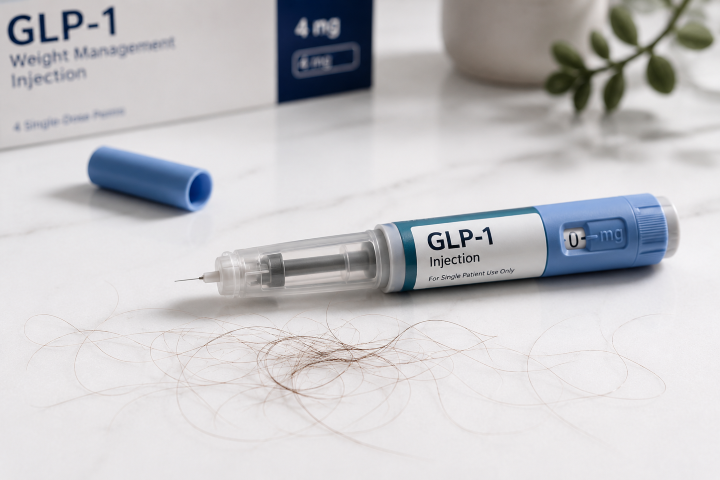
Losing Weight, Losing Hair? What GLP-1 Shedding Really Means for Your Scalp
GLP-1 medications like semaglutide and tirzepatide have become a major part of the conversation around weight loss. For many people, they can be life-changing. But alongside the benefits, another concern has started showing up more often: sudden hair shedding.
If you’ve started a GLP-1 medication and noticed more hair in the shower, on your brush, or around your bathroom floor, it can feel scary. It may even make you wonder if the medication itself is damaging your hair.
The answer is usually more nuanced.
In many cases, the shedding is not because the hair follicle has been permanently harmed. It may be the result of a temporary shift in the hair cycle called telogen effluvium, which can happen after rapid weight loss, reduced calorie intake, stress on the body, illness, hormonal changes, or nutritional changes.
In other words, your hair may be responding to the speed and intensity of the change your body is going through.
Why Weight Loss Can Trigger Shedding
Hair is very sensitive to internal stress. Even though we often think of hair as something external, the follicle is highly responsive to what is happening inside the body.
When the body goes through a major shift, it may redirect energy and nutrients toward essential functions. Hair growth, while important to our confidence and identity, is not considered essential for survival. So when the body senses stress, a larger number of hairs can move from the active growth phase into the resting and shedding phase.
This shedding often does not happen right away. Many people notice it two to three months after the triggering event, which can make it difficult to connect the dots.
So someone may begin a GLP-1 medication, lose weight, eat less than usual, struggle with protein intake, experience nausea, or unintentionally reduce key nutrients. Then a few months later, the hair starts shedding.
That delay is one reason this type of hair loss can feel so confusing.
Is it the Medication or the Weight Loss?
This is the question many people are asking.
For some medications in this category, hair loss has been reported in clinical data, especially in connection with weight reduction. But from a hair-cycle perspective, the bigger picture often involves the rapid change happening in the body.
The follicle is not only responding to the medication. It may also be responding to:
- rapid weight loss
- lower protein intake
- reduced overall calories
- iron or ferritin changes
- vitamin D or B12 deficiency
- thyroid changes
- hormonal shifts
- stress and sleep disruption
- inflammation
- changes in digestion or absorption
This is why it is so important not to look at hair shedding in isolation. Hair loss is rarely caused by one single factor. It is usually a pattern.
What Telogen Effluvium Can Look like
Telogen effluvium usually shows up as diffuse shedding rather than one small bald patch. You may notice that your ponytail feels thinner, your part looks wider, or your hair seems to come out more easily when washing or brushing.
This can be emotionally distressing, especially when you are already navigating changes in your body. The good news is that telogen effluvium is often temporary once the underlying trigger is addressed.
But “temporary” does not mean it should be ignored.
When shedding is active, the goal is to support the body, protect the scalp environment, and identify anything that could be prolonging the hair cycle disruption.
Why the Scalp Still Matters
When people think about GLP-1-related shedding, they often focus only on nutrition or supplements. Those can matter, but the scalp should not be overlooked.
The scalp is the environment where the hair follicle lives. If the scalp is inflamed, congested, oily, dry, itchy, flaky, or imbalanced, the follicle may not have the best environment to recover.
This is where a trichology perspective can be helpful. We are not only asking, “What product can make the hair grow?” We are asking, “What is the condition of the scalp, and is it creating the right environment for growth?”
A healthy scalp supports better follicle function. An irritated or congested scalp can make an already stressful shedding episode feel worse.
What to Pay Attention to
If you are taking a GLP-1 medication and noticing hair changes, start by looking at the bigger picture.
- Are you eating enough protein each day?
- Have your meals become much smaller or less balanced?
- Have you had recent bloodwork to check common hair-related markers?
- Are you losing weight very quickly?
- Are you sleeping well?
- Has your scalp become oilier, drier, itchier, or more sensitive?
- Are you seeing shedding, miniaturization, or both?
That last question matters. Shedding and miniaturization are not the same thing.
Shedding means more hairs are falling out than usual. Miniaturization means the hair shaft is becoming finer over time. A person can have one or both. If miniaturization is also present, there may be additional factors involved, such as genetic pattern thinning, hormonal sensitivity, or scalp inflammation.
What Not to Do
It is understandable to panic when shedding increases, but this is not the time to throw every trending hair product at the scalp.
Avoid aggressively scrubbing the scalp, overusing oils, starting multiple supplements without guidance, or applying strong growth actives onto an irritated scalp. More is not always better. In some cases, doing too much can create more inflammation or buildup.
It is also important not to stop or change a prescription medication without speaking to the medical provider who prescribed it.
Hair shedding should be taken seriously, but it should be approached calmly and thoughtfully.
A Better First Step: Understand what is Actually Happening
At âme vitality, we believe in understanding the scalp and hair before choosing a treatment path. A Hair & Scalp Diagnostic Consultation allows us to look closely at the scalp environment, follicle condition, density, hair shaft quality, and signs of imbalance that may be contributing to the shedding.
This matters because two people can both say, “My hair is falling out,” but need very different support.
One person may be experiencing a temporary shedding cycle after rapid weight loss. Another may have underlying miniaturization that became more noticeable during shedding. Someone else may have scalp inflammation, excess sebum, low hydration, or buildup that needs to be addressed before growth-focused treatments make sense.
The goal is not to guess. The goal is to understand.
Supporting the Hair during Body Change
If you are losing weight and noticing hair shedding, your hair may be asking for support, not panic.
That support may include improving protein intake, reviewing nutrient status with your healthcare provider, supporting digestion, reducing scalp inflammation, balancing the scalp barrier, and choosing a hair care routine that is gentle but effective.
Hair growth takes time. The hair cycle does not respond overnight. But when the underlying stressor is addressed and the scalp environment is supported, many people can move through this type of shedding and begin to see recovery.
The Takeaway
GLP-1-related hair shedding is not always a sign that something is permanently wrong. Often, it is a sign that the body has gone through a significant transition.
But it is still worth paying attention to.
Your hair is connected to your nutrition, hormones, stress, metabolism, and scalp health. When your body changes quickly, your hair may reflect that change a few months later.
If you are noticing increased shedding, thinning, or changes in your scalp while taking a GLP-1 medication, a personalized scalp and hair analysis can help you understand what is happening and what kind of support your hair actually needs.
Healthy hair begins with a healthy scalp, but it also begins with listening to what the body is trying to tell us.